Showing posts with label online stock trading and investments. Show all posts

Wednesday, November 17, 2010

personal finance planning


Conduct a Financial Fire Drill to Assess Financial Health


We conduct fire drills to ensure fire warning systems are functional and that building occupants know what to do in the event of a fire-related emergency. Apply that same type of stress test to your money with a financial fire drill.

Photo by Steve Snodgrass.


Finance and frugality blog Frugal Dad urges us to take stock of our financial health by conducting a financial fire drill. Just like a real fire drill helps you run through a dangerous scenario without risk—"Who put the file cabinets in front of the fire exit?"—a financial fire drill shows you how effective your escape routes are and how big your safety net is.


You'll need to gather up all your bills, take stock of your savings and emergency fund, and head over the Frugal Dad to run through their financial fire drill checklist—which includes great tips like making a slash-and-burn list of non-essential services you can cancel the minute you get laid off or in other financial trouble.


Your daily dose of news and tidbits from the world of money in politics:

DEMOCRATS MORE LIKELY TO PERSONALLY ATTACK OPPONENTS IN ADVERTISEMENTS: According to a recent report by the Wesleyan Media Project, in 2010, �pro-Democratic ads focused on the personal characteristics of Republican candidates in 21 percent of their attack ads� compared to 11 percent of pro-Republican ads. This is up from the 12 percent of Democratic attack ads in 2008 that were focused on personal characteristics. 

The report cautions against claims that this election is unusually negative stating the proportion of negative to positive ads is comparable to 2008. However, the big difference is that among negative ads there is an increase among personal attack ads. Overall, that rate has gone up from 14 percent in 2008 to 20 percent in 2010. The report also mentions that attack ads �are far more likely than other ads to be sponsored by parties and/or interest groups� rather than by candidates themselves.

When making independent expenditures with overt messages in favor or opposition to federal candidates, political groups must tell the Federal Election Commission whether their expenditure is to �support� a candidate or �oppose� a candidate. A Center for Responsive Politics analysis of outside groups� expenditures �opposing� candidates compared to ads �supporting� candidates since October 1st shows �opposing ads� totaling $218 million and supporting ads totaling $42 million. These expenditures include TV ads, radio ads, web ads, fliers, mailings, canvassers, phone banks and other communications:

REPUBLICAN RANKING MEMBERS ARE THE COOL KIDS ON THE BLOCK AGAIN:
Ranking members of House committees are becoming the popular kids. If
the Republicans take over majority in the House, committee ranking
members like Rep. David Camp (R-Mich.) will be the new chairmen. As the
New York Times reported Tuesday, Republicans in positions to become
chairmen of House committees are seeing an influx of cash and popularity
at fundraisers. Camp, the current ranking member of the tax-writing
House Ways and Means Committee is receiving more contributions as
lobbyists plan for the future.


Jennifer Bell, a former Senate Finance Committee aide and a current
health care lobbyist told the New York Times, �You don�t wait until Nov.
3 and say, �What is the plan?� Obviously, it is the majority that sets
the agenda.�


As OpenSecrets Blog reported yesterday, many industries have been
planning ahead and have started to shift contributions to Republicans.
This phenomenon is not unique to this election as contributions have
historically favored the majority party and have fluctuated accordingly.


Below is a Center for Responsive Politics analysis of contributions to
Camp that shows a sharp increase in contributions during the last three
months - through September 30th. The second chart shows the total contributions to all candidates
during the same period for a linear comparison:


U.S. FALLS OUT OF THE TOP 20 LEAST CORRUPT NATIONS LIST: Transparency International released their annual Corruption Perceptions Index on Tuesday revealing that the United States has dropped from the 19th least corrupt nation in 2009 to 22nd place this year. According to Reuters, Nancy Boswell, the President of TI in the United States stated that the United States has lost integrity and public faith about ethics in America due in part to the lending practices in the subprime crisis, �Bernard Madoff's Ponzi scheme and rows over political funding.�

On the bright side, the United States is perceived to be just less corrupt than Uruguay, France, Estonia and Slovenia.

Have a news tip or link to pass along? We want to hear from you! E-mail us at press@crp.org.

alpine payment systems scam

BillBoard - Blogs - The Buffalo <b>News</b>

The Buffalo News updated every day with news from Buffalo, New York. Links to national and business news, entertainment listings, recipes, sports teams, classified ads, death notices.

Good <b>news</b>: Feds to ban caffeinated alcoholic drinks for some <b>...</b>

Good news: Feds to ban caffeinated alcoholic drinks for some reason.

<b>News</b> Corp. iPad Venture Fishing In Wrong Pond | paidContent

Another day, another hire at News Corp.'s super-duper secret iPad venture dubbed The Daily—and another reason to question whether this is going to be yet another wobbly Rupert Murdoch digital-news enterprise. ...


 by Julia Delligatti


BillBoard - Blogs - The Buffalo <b>News</b>

The Buffalo News updated every day with news from Buffalo, New York. Links to national and business news, entertainment listings, recipes, sports teams, classified ads, death notices.

Good <b>news</b>: Feds to ban caffeinated alcoholic drinks for some <b>...</b>

Good news: Feds to ban caffeinated alcoholic drinks for some reason.

<b>News</b> Corp. iPad Venture Fishing In Wrong Pond | paidContent

Another day, another hire at News Corp.'s super-duper secret iPad venture dubbed The Daily—and another reason to question whether this is going to be yet another wobbly Rupert Murdoch digital-news enterprise. ...


alpine payment systems scam

BillBoard - Blogs - The Buffalo <b>News</b>

The Buffalo News updated every day with news from Buffalo, New York. Links to national and business news, entertainment listings, recipes, sports teams, classified ads, death notices.

Good <b>news</b>: Feds to ban caffeinated alcoholic drinks for some <b>...</b>

Good news: Feds to ban caffeinated alcoholic drinks for some reason.

<b>News</b> Corp. iPad Venture Fishing In Wrong Pond | paidContent

Another day, another hire at News Corp.'s super-duper secret iPad venture dubbed The Daily—and another reason to question whether this is going to be yet another wobbly Rupert Murdoch digital-news enterprise. ...


Friday, September 24, 2010

personal finance manager


Washington (CNN) - Fresh on the heels of Joe Miller's surprising win over Sen. Lisa Murkowski in the Alaska Republican Senate primary, the Tea Party movement is setting its sights on Delaware.


Now the Delaware Republican Party is taking heed – and taking on – the Tea Party-backed candidate in the state's Republican Senate primary, sparking a war of words between the state's establishment GOP and the Tea Party movement.


It's a race that pits conservative Tea Party favorite Christine O'Donnell against moderate Rep. Mike Castle, Delaware's former two-term governor and lone Congressman since 1993.


Both candidates' campaigns have become increasingly caustic, especially as Tea Party-backed candidates across the country have picked up win after win against GOP establishment candidates.


The Tea Party Express endorsed the conservative O'Donnell in July, and recently committed to spending at least six-figures in the state.


"We are launching an aggressive multimedia and multi-platform campaign to help propel Christine O'Donnell to victory, and we've only just begun," Amy Kremer, Chairman of the Tea Party Express, said in a statement.


The group originally planned to spend about $250,000 on the race, but is now considering expanding their presence with TV and radio ad buys in Philadelphia, said Tea Party Express political director Joe Wierzbicki.


A similar last minute media blitz by the Tea Party Express is credited with propelling Miller – a formerly little known candidate – to victory over Murkowski, the Republican Party-backed incumbent.


The group launched a series of TV and radio ads Thursday that support O'Donnell, and rail against Castle as a liberal candidate who "just keeps supporting the failed policies of Nancy Pelosi and Harry Reid."


It's a move that has the Castle campaign fighting back.


"Out-of-state interest groups have threatened to spend half a million dollars to fund the disgusting tactics being used by the O'Donnell campaign to make accusations," said Castle campaign manager Mike Quaranta.


Meanwhile, the Castle campaign has launched therealchristine.com, a site devoted to aggregating negative news about O'Donnell.


Tom Ross, state committee chairman of the Delaware Republican Party, defended the negative nature of the site. "The stories might not be flattering, but they are factual. ...Sometimes it is necessary to make sure that the facts get out there," Ross said.


O'Donnell has faced criticism over her personal finance issues and leftover debt from previous, unsuccessful bids for a Delaware Senate seat. She has also been accused of misstating the results of her run against Joe Biden.


When asked to clarify her remarks in an interview Thursday with radio host Dan Gaffney of WGMD, O'Donnell seemed to grow increasingly frustrated, and ultimately blamed her statements on a grueling campaign schedule.


Ross, who is backing Castle, said that O'Donnell's history is troubling.


"This is a group and candidate that clearly seem to have a problem with facts. It is shocking that they would come in and support a candidate of Christine O'Donnell's ilk," he said.


"It is sad that the group didn't investigate the candidate that they're supporting… and surprising they would take their supporters' money that they donated and squander it in such a fashion," Ross said.


Ross also questioned whether O'Donnell is capable of pulling off an upset similar to Miller's win in Alaska.


"In Alaska, it was that Joe Miller is an Ivy League grad, a war hero, excellent standing in the community," Ross said. "Look at Christine O'Donnell. She has none of those attributes. She is career politician. She's run unsuccessfully for Senate three times."


Yet, Wierzbicki criticized Ross for dismissing O'Donnell, calling her a true conservative.


" is everything that is wrong with the establishment of the Republican Party. He should be fired for serving to undermine a Republican candidate who stands on conservative principles. It's his job to advance all Republicans in the state of Delaware. Instead he has become a tool for those who wish to thwart the Republican Party platform and turn the GOP into a Democrat-lite outfit. We find him reprehensible and shameless," Wierzbicki said.


Republican Gov. Chris Christie of neighboring New Jersey endorsed Castle Thursday.


The winner will face Democrat Chris Coons in the race for Vice President Joe Biden's former seat.


If you walked into the average bookstore, you'd think that women rule the roost when it comes to personal finance. From Suze Orman's now-classic Women and Money to the more recent (and more colorfully titled) Bitches on a Budget, there's no shortage of do-it-yourself financial advice tailored to women.


Apparently, though, when women make the momentous move from self-help to seeking professional advice about investing and retirement, things go rapidly downhill. A recent study by the Boston Consulting Group revealed that women perceived themselves as receiving wealth management services at a level of quality that is inferior to that received by their male counterparts.


According to the study, women are the key decision-makers when it comes to 27% of the wealth worldwide: that's $20 trillion! But despite the massive chunk of power they wield, 55% of the women surveyed in the study said they felt their wealth manager could do a better job of advising them. Almost a quarter of the respondents said private banks needed "significant improvement" in the services they offer to women.


"The dissatisfaction stems from the unshakable perception that men get more attention, better advice, and sometimes even better terms and deals," according to study co-author Peter Damisch. "We heard this sense of subordination time and time again in our interviews."


This perceived disparity in service arose from several key disconnects in the relationships and communications between women and their financial advisers. Manisha Thakor, Chartered Financial Analyst and women's financial literacy advocate, offers some steps savvy female investors can take to avoid being under-served by their wealth managers and investment advisers:


1. Find your adviser and get your financial education from women-run resources.


The financial services industry is dominated by males and therefore the "DNA is structured around the male experience," Thakor explains, adding that she sees many firms making an effort to change this. Most financial advisers are men, who may not inherently understand the whole-life nature of the average woman's financial plans and needs. They also may have very different communication styles than their women clients.


Thakor recommends women use women-created resources like LearnVest and DailyWorth to educate themselves in order to avoid the intimidation factor when talking about investment products with their advisers. She also encourages women to consult Garrett Planning Network, founded by Certified Financial Planner Sheryl Garrett, to locate a local certified financial planner who works on an hourly-fee-only basis. Taking these steps, Thakor explains, may alleviate the concern expressed by many women in the BCG study that they were not being taken seriously or talked to on the same level as male clients by their financial advisers.


2. Expressly state your ideal career trajectory, then ask how you should alter your investment plans accordingly.


In the BCG study, women stated that their investment advisers fundamentally misunderstood what was actually important to them, and recommended a too-narrow range of inappropriate investment vehicles as a result. Many said their advisers assumed they had a lower risk tolerance than they actually did, or that their advisers focused on short-term results and disregarded their long-term goals, which often included time out to care for a child or parent.


Thakor offers women a script of sorts to remedy this communication disconnect. "Go in and say: "I want to be a mom and I may take X amount of time out of the work force," she advises. Then ask, "How do we adjust how much I need to save and how I should invest to compensate for this?"


3. Start saving early.


evergreen big white booty

Can &#39;Fox <b>News</b> North&#39; win its next battle? - Canada - Macleans.ca

Sun TV's Canadian-content promise might be its best selling feature.

<b>News</b> - Lindsay Lohan &quot;Demure and Quiet&quot; as She Arrived at Jail <b>...</b>

Like her previous stints in the slammer, she'll be kept away from other inmates in a 12x9 cell.

Tax The Rich! (9pm Saturday on Fox <b>News</b> Channel) « John Stossel

In my weekend special, The Battle for the Future -- it airs Saturday at 9pm and Sunday at 8 PM and.


Can &#39;Fox <b>News</b> North&#39; win its next battle? - Canada - Macleans.ca

Sun TV's Canadian-content promise might be its best selling feature.

<b>News</b> - Lindsay Lohan &quot;Demure and Quiet&quot; as She Arrived at Jail <b>...</b>

Like her previous stints in the slammer, she'll be kept away from other inmates in a 12x9 cell.

Tax The Rich! (9pm Saturday on Fox <b>News</b> Channel) « John Stossel

In my weekend special, The Battle for the Future -- it airs Saturday at 9pm and Sunday at 8 PM and.


big white booty

Can &#39;Fox <b>News</b> North&#39; win its next battle? - Canada - Macleans.ca

Sun TV's Canadian-content promise might be its best selling feature.

<b>News</b> - Lindsay Lohan &quot;Demure and Quiet&quot; as She Arrived at Jail <b>...</b>

Like her previous stints in the slammer, she'll be kept away from other inmates in a 12x9 cell.

Tax The Rich! (9pm Saturday on Fox <b>News</b> Channel) « John Stossel

In my weekend special, The Battle for the Future -- it airs Saturday at 9pm and Sunday at 8 PM and.


Noel Coward by Greenman 2008


Noel Coward by Greenman 2008


how to budget personal finances


Events of the last week have made the Deficit Commission an embarrassment. Co-Chair Alan Simpson is a one-man disaster movie, compulsively offending one key voting bloc after another. Commission member Paul Ryan faced an angry crowd over his anti-Social Security stance, while another Commissioner locked experienced workers out of a nuclear facility rather than provide retirement benefits.


That's right: He's cutting retirement benefits.


But if the political blowback is obvious, here's what isn't: The Commissioners who are determined to cut your Social Security benefits are going to enjoy their own retirements in comfort. Their own pension plans insulate them from the fears that many other Americans face, and they don't have the professional expertise that would help them understand those concerns. In fact, the Commission's only expert on retirement is Rep. Jan Schakowsky, and she apparently opposes benefit cuts. The rest of the Commission is dominated by people who've expressed their desire to cut Social Security, despite their own secure futures. Millions of working Americans who have contributed to Social Security all their lives will lose out if these Commissioners have their way.


Happy Labor Day.


Normally I consider it off-limits to discuss people's personal finances when discussing their political opinions. But these Commissioners' lack of subject matter expertise, along with their lack of empathy, is important. If you don't know much about the topic and are protected from the problem, what makes you credible? Their pre-established prejudices makes the situation even worse, and their own situations underscore the irony of their self-professed willingness to make "brave choices" - choices whose consequences will mean little or nothing to them.


The Commission's Social Security obsession is odd anyway, since the projected Social Security shortfall comes out to only 0.7% of GDP. Nevertheless, these Commissioners have made their benefit-cutting intentions plain, presumably because they want to offer up America's seniors as a sacrifice to the bond markets. So how will these would-be income-slashers for the elderly make out in their own golden years? They'll be golden.


Consider Commissioner Alice Rivlin. Rivlin co-authored a paper that called for raising the retirement age and other benefit cuts, and recently released a specious paper about "Saving Social Security." As a former HEW Undersecretary, CBO Director, White House Budget Director, and Federal Reserve Vice Chair, she will presumably enjoy a comfortable retirement supported by multiple public pensions. Says Rivlin: ""We can't get out of this problem without doing both spending cuts, especially slowing the growth of entitlement, and tax increases."


Experts on Social Security finance (including the long-time Chief Actuary for the program) flatly disagree with Rivlin, pointing out that an adjustment to the payroll tax cap would unquestionably be enough to get the job done. They have the numbers to prove it. So why does Rivlin, who does not have their expertise in this area, disagree? Go ask Alice.


Co-Chair Erskine Bowles brokered a deal with Newt Gingrich to cut Social Security in the 1990s, when he served as Bill Clinton's Chief of Staff. Before that he headed the Small Business Administration, so his government tenure presumably qualifies him for a Federal pension. If not, don't worry: He receives $425,000 per year in his current job running the public universities of North Carolina, and the people of North Carolina are presumably also funding a pension on his behalf. To his credit, Bowles pledged to donate $125,000 of his salary for need-based student funds - but then, he can afford it. As the son of a US Congressman, Bowles had the education and connections needed to make millions as an investment banker. The added income he earns today as a Board member for General Motors and Morgan Stanley will help, too - and his government experience undoubtedly helped him win those positions, too.


Republican Rep. Paul Ryan, an aggressive advocate of Social Security cuts and privatization, will also enjoy his sunset years in comfort, thanks to a publicly-funded pension from his tenure as a Congressman. (He'll presumably earn even more as a result of his employment as an aide to two United States Senators.) Rep. Jeb Hensaerling has served as both a Representative and as an aide to Sen. Phil Gramm, so he should be safe from financial insecurity in his old age too .


The average annual pension payments for former members of Congress ranged from $41,000 to $55,000 in 2002, considerably more than the average $13,836 that Social Security recipients received in 2009. Yet neither Ryan nor Hensaerling have proposed cutting Congressional retirement benefits - nor should they. Sound pension plans like theirs were once available to most working Americans, and more effort should be made to restore them.


Former SEIU President Andrew Stern, who once might have been counted on to defend Social Security, recently sneered at Commission critics as "assassins of change" while saying that "all entitlements should be on the table." Mr. Stern's annual pension is $152,000 - and he retired at the age of 59, not 70. Nevertheless, Stern now publicly muses about "whether defined benefit pensions can really exist in the long run in a globalized economy."


Judd Gregg, who wants to raise the retirement age to 70, will receive a Federal pension for his Senate position. Gregg, like Alan Simpson, is the son of a Governor (self-made men, you might say), which means that public pensions also ensured that neither of them had to worry about supporting their aged parents. Tom Coburn, another would-be Social Security cutter, will receive a Congressional and Senatorial pension too.


David Cote, the CEO of Honeywell, provides some "private enterprise" perspective to the Commission's work. But Cote's wealth comes in part from Honeywell's government contracts, which exceed $4 billion annually. What's more, Cote's "free enterprise" ethic didn't stop him from making sure that Honeywell grabbed a few million in stimulus money from the taxpayers, too. A few billion from the Pentagon here, a few million more from Uncle Sam there - that'll plump up the nest egg a little for Mr. Cote's sunset years.


Cote made the headlines this week when Honeywell locked out the union workers at a nuclear power plant over a labor dispute - even though the workers agreed to stay on the job to protect public safety. Instead, Cote hired replacements and put them through a pared-down training process. The image of Homer Simpson comes to mind, pushing the wrong buttons and spilling beer on the reactor console - which would presumably make Cote Mr. Burns.


But it's no joking matter. Apparently there's real danger, which is why the Nuclear Regulatory Commission reportedly stepped in to block Honeywell from distilling uranium with its crew of replacement workers And what are the union and Honeywell arguing about? Honeywell's raising health care costs - and eliminating retiree pension plans for new workers.


That's right. A member of the Commission that's pretending to judge our retirement security with impartiality would rather have hastily-trained amateurs handle nuclear materials than bargain openly with his workers - about their retirement. D'oh!


As for Simpson (Alan, not Bart), to say that he suffers from "political Tourette's syndrome" would be a disservice to Tourette's sufferers. Most of them don't really say socially objectionable things, and those who do (it's called "coprolalia") don't mean what they say. But Simpson does. By attacking senior citizens as "greedy geezers," then offending women with his "milk cow with 100 million tits" comment, and now offending veterans' groups, Simpson has now hit the voting bloc trifecta.


And Cote's outraged labor, a fourth group. But the problem isn't Simpson anymore, or Cote for that matter. It's the Commission itself. The coprolalic curmudgeon Simpson has done a service to the nation. He's drawn attention to the Commission, and to the anti-Social Security biases held by so many of its members - all of whom will retire in comfort, thanks to those whose benefits they would cut. It's the comfortable afflicting the afflicted.


If these Deficit Commission members want their recommendations to have any credibility, they should pledge to live on the same Social Security benefits that they would impose for other Americans. Better yet, they should dedicate themselves to helping provide every American with the kind of retirement security they enjoy. That was part of the social contract this nation embraced during its years of greatest economic growth, the fulfillment of a promise that a lifetime of work should never end with years of deprivation. They should be working to restore that contract, not erode it even further.


One thing is clear: This Commission has no business making recommendations about Social Security.


(Sign a petition asking Congress and the President to protect Social Security from the Deficit Commission. Roger Hickey has more here.)


Additional links:


* Sam Seder and I discussed Social Security this week while co-hosting The Young Turks.


* For further reference on the Commission's members and their biases, see Firedoglake and Talking Points Memo.


* House Democrats are vowing to protect Social Security from any cuts. The polls show why that's a very wise idea.


I am a 25 year old college student (school, job + savings, back to school… long story) and boy do I wish I knew about all the resources available to me back then. Good for you for starting early!


Lucky for me I have 1 parent (divorced) who is so bad with money that I have been scared into financial responsibility from a young age. Was I perfect? Hahaha.. but I am doing better than 95% of my friends are right now so I guess I am doing something right?


Here is my advice:


1. GET A JOB! - 2 shifts a week is all it takes. I have friends who just graduated from college without ever having a job. Result? No work experience so nowhere will hire them. Some had problems even getting an internship! Try for customer service jobs. Employers value people skills more than flipping burgers.


2. BUDGET! - Cant teach an old dog new tricks so it is best to start young. Add up your monthly expenses such as rent/insurance/cell/gas/etc and divide by 2 or 4 (depending on weekly/bi-weekly payday). Put this money in savings and no touchy! Once you can live on that budget a certain % for an emergency fund and then % for savings. The rest is your “fun” money. As others have said: pizza, ipods, and clothes are “fun money” and NOT emergencies!


3. DEBIT, CREDIT, or CASH?


DEBIT- I am a die hard debit card user. My credit union has detailed (free) online banking. I check my online bank statement in the morning and at night and go over my spending. Think of it as an instant virtual slap in the face about your spending habits. It hurts for the best.


CASH - Some people just cant be responsible enough to respect the plastic and do better with cash. Try and keep bigger bills on you. Breaking a $5 is less mentally painful than breaking a $20. $1s are dangerous. That can of coke is “only $1″. $7 a week, $30 a month. It adds up.


CREDIT - Many say don’t get a credit card, but I disagree. If you are responsible college is a great time to build credit (unless you have some serious control issues… if that is the case, these are not the droids you are looking for…). Not building credit early is the BIGGEST regret I have. Good credit means better rates when buying a house or a car. Do your research first. Consider a student, or if you have to a secured card.


More about credit-


*Do NOT apply for a credit card on campus. It is like selling your soul for a candy bar. Every time you apply for a credit card they run a credit check, which “pings” you. Too many pings hurts your credit score. Not good. Friend did that at every kiosk that offered something free to sign up when she was 20. This was 7 years ago and her credit is still recovering! The same is true for store credit cards. Do.Not.WANT!

*Pick a required expense, such as gas or cell phone bill and put it on the credit card. Pay off the card at the end of each month. Repeat.

*Do NOT use your credit card to buy “fun money” purchases. No clothes, no ipods, no pizza. This is why you have your debit card of cash. Don’t even think about it mr.!


4. EATING/DRINKING - This is going to be the weird random one from one young person to another.(Part of this only applies to you on/after your 21st birthday!) The young person’s life revolves around being social. For a 20 something this normally involves dinner and/or drinks with friends. It is expensive! So much money can be saved if you plan ahead!


*Eating - Going out to eat is a much needed social experience but NEVER go out to eat starving! Just like you don’t go shopping when you are hungry you never want to experience the whole “eyes bigger than stomach” thing while dining out. Have a snack an hour or so before you meet friends for dinner. This will help you avoid ordering that $8 appetizer! Also, try and order things that reheat or are good cold. LEFTOVERS! Also, water is free. It is good for you! Coke is $3. Go buy yourself a 12 pack and have one when you get home.


*Drinking - Most 20 somethings drink. It is a very expensive part of our lives. It is a social event to help us forget about school and work. We like bars. Unfortunately $5 for a beer is highway robbery! NEVER go to a bar completely sober (when you are 21+ & no drinky + drivey!). Have a drink or 2 at home and then have a beer at the bar. You will save TONS. Also, bring cash to a bar. Only bring as much cash as your sober self would like to spend. Alcohol impairs judgment. Sober you will thank drunk you for not spending. Drunk you will thank sober you for being smart enough to make sure you can afford the advil to take care of that hangover the next day. It is a win win.


Put all that saved food and drink money towards something that will last.


5. BOOKS - Buy used whenever possible. Check online first because campus stores are normally a ripoff. Try and sell the books back online, even if they have released a new edition. Most student book stores on campus will only give you 1/2 of what someone online will be willing to give you!


6. CARS - Buy used and reliable, but not “cheap”. New cars lose tons of value when you drive them off the lot. Don’t buy a “cheap” used car on it’s last leg. Think Goldilocks - not too new, not too old, juuusssttt right! Save up as much money as possible. Pay for it in cash if you can. If not, save up at least 2/3 before purchasing and do your homework!


And whatever you do: AVOID parking tickets, speeding tickets, registration fines.. may as well light the money on fire! Or if you do not want it I will give it a nice home and save you the trouble.


company big white booty

BREAKING <b>NEWS</b>: Lindsay Lohan Ordered Back To Jail; Bail Revoked <b>...</b>

9:08 am PST: The judge has thrown the book at Lindsay. Her bail was revoked. She was handcuffed and taken into custody. A probation hearing was set for October 22nd. Lindsay appeared stunned. 8:22 am PDT: Lindsay has entered the ...

MOH beta to &quot;clear up misunderstanding&quot; PC <b>News</b> - Page 1 <b>...</b>

Read our PC news of MOH beta to. ... Eurogamer tested the Medal of Honor single-player campaign earlier this month, and then sat down executive producer Greg Goodrich for a chat. Oh Tiery me. Got a tip? Email news@eurogamer.net. ...

Actual Real Life Good Internet <b>News</b>: Super Wi-Fi Coming Soon <b>...</b>

Most of the time, news about the internet is both hard to understand and seemingly bad. There are always stories coming out about net neutrality where you.


BREAKING <b>NEWS</b>: Lindsay Lohan Ordered Back To Jail; Bail Revoked <b>...</b>

9:08 am PST: The judge has thrown the book at Lindsay. Her bail was revoked. She was handcuffed and taken into custody. A probation hearing was set for October 22nd. Lindsay appeared stunned. 8:22 am PDT: Lindsay has entered the ...

MOH beta to &quot;clear up misunderstanding&quot; PC <b>News</b> - Page 1 <b>...</b>

Read our PC news of MOH beta to. ... Eurogamer tested the Medal of Honor single-player campaign earlier this month, and then sat down executive producer Greg Goodrich for a chat. Oh Tiery me. Got a tip? Email news@eurogamer.net. ...

Actual Real Life Good Internet <b>News</b>: Super Wi-Fi Coming Soon <b>...</b>

Most of the time, news about the internet is both hard to understand and seemingly bad. There are always stories coming out about net neutrality where you.


big white booty

BREAKING <b>NEWS</b>: Lindsay Lohan Ordered Back To Jail; Bail Revoked <b>...</b>

9:08 am PST: The judge has thrown the book at Lindsay. Her bail was revoked. She was handcuffed and taken into custody. A probation hearing was set for October 22nd. Lindsay appeared stunned. 8:22 am PDT: Lindsay has entered the ...

MOH beta to &quot;clear up misunderstanding&quot; PC <b>News</b> - Page 1 <b>...</b>

Read our PC news of MOH beta to. ... Eurogamer tested the Medal of Honor single-player campaign earlier this month, and then sat down executive producer Greg Goodrich for a chat. Oh Tiery me. Got a tip? Email news@eurogamer.net. ...

Actual Real Life Good Internet <b>News</b>: Super Wi-Fi Coming Soon <b>...</b>

Most of the time, news about the internet is both hard to understand and seemingly bad. There are always stories coming out about net neutrality where you.


Quizzle is going green - sign up to find out how green you are and get a free credit report! by QuizzleTown


Quizzle is going green - sign up to find out how green you are and get a free credit report! by QuizzleTown


Saturday, September 18, 2010

personal finance


The Skinny on Real Estate Investing is an introduction to the subject. It provides the Big Picture about what it takes to buy and sell real estate for profit, but it doesn’t give details on how to find deals, how to make deals, and so on. This is the first part of a three-part series, and I’m unsure whether all of the books in tandem would actually give the reader all the info they need to invest in real estate. But this is a fine place to start. I’ve been interested in the subject for a long time (much to Kris’s chagrin), and have a much better grasp of what’s involved after having read this book. I plan to read part two.


Personal-finance comics

For a while now, I’ve wanted to find a way to combine two of my greatest passions: personal finance and comic books. I’ve read some personal-finance comics (most notably those from the Federal Reserve), and, to put it frankly, they suck. They’re dull and uninspiring. I’ve chatted with Pop from Pop Economics about how one could produce effective personal-finance comics, but haven’t taken any action.


That’s okay, though, because Jim Randel seems to have found a way to meld comics and money in a way that makes sense. Because make no mistake: The “Skinny On” books are comics. Sure, they use cheesy stick figures instead of work from expensive artists, but so what? That’s part of their charm.


By sticking with (heh) simple line drawings, Randel is able to focus on what’s important: the content of his books. The comics format provides freedom that a traditional text-based book doesn’t have, but Randel doesn’t abuse this. Instead, he’s created a series of fantastic, informative volumes about financial literacy and personal achievement. I give these books my highest recommendation.


Books in this series that I’ve read and can recommend include:


  • The Skinny on Real Estate Investing (this is the first of a three-part series)

  • The Skinny on Credit Cards (great for somebody getting their first credit card — like a college student)

  • The Skinny on the Housing Crisis

  • The Skinny on Success


And writing this review has made me want to read more, so I have a pile of other “Skinny On” books to take home with me for the weekend:


  • The Skinny on Time Management (I wonder if it says: “Don’t play Starcraft II!”)

  • The Skinny on Willpower

  • The Skinny on Networking

  • The Skinny on The Art of Persuasion


Are there any duds in here? There may be, but I haven’t found one yet. I’ve been impressed with the presentation and content of these books. The Amazon reviewers seem to love the books, too. These titles may never become best-sellers like the “for Dummies” and “for Idiots” series, and that’s too bad. The “Skinny On” books are great introductions to their topics and deserve a wider audience.


Behold: the most profoundly pessimistic attack ad of 2010. Meg Whitman has delivered unto us a masterpiece of dirty politics.


What is most striking about this already-infamous ad isn't the boldness of its mendacity--though it certainly has that--but the cynicism of its timing. It's the sort of unabashedly nasty hit that one would expect just days before an election, and even then only from an outside interest group. Yet here it is, delivered to us in early September with Meg Whitman's name right there on the card. By not only producing so brazen a piece of misinformation but also airing it with more than enough time to effectively rebut, Whitman is betting the house on the politics of personal animosity.


If you live in California or happen to be a political junkie, you've no doubt seen it already and can skip the next paragraph. But for those of you who have avoided it (probably due to a weak stomach or some lingering, endangered shred of personal or political optimism) here's a recap:


Bill Clinton, in a 1992 debate, sits face-to-face with Jerry Brown. Brown looks at Clinton like a kid called to the principal's office. Clinton blasts Brown as a tax-raising liar: "CNN, not me, CNN says his assertion about his tax record was, quote, 'just plain wrong.' He raised taxes as Governor of California. He doesn't tell the people the truth." That's two levels of surrogate Whitman is hiding behind, for those of you keeping track. On its own, the ad is devastating.


There's just one little problem: That CNN report turned out to be "just plain wrong," and Whitman's campaign--like all interested parties--has been fully aware of that for some time. From what the San Jose Mercury-News has been able to piece together, the CNN report used the wrong years both in determining the base of comparison and in identifying the budgets Brown had control over. This made it seem Brown was responsible for a sizable tax increase during Reagan's last year in office and failed to give him credit for tax cuts later in his tenure. The LA Times and California Department of Finance also revisited the numbers and found them to be outright wrong, for the same reasons, in the same ways. Brown was telling the truth. He had cut taxes as Governor of California.


Whitman knew full well that the story was a lie, but she wanted to repeat it all the same. The excuse her communications director offered the Mercury-News: "Bill Clinton, not me, said Jerry Brown 'doesn't tell people the truth.'" Sound familiar?


But this ad is so much more perverse than any simple repetition of untruths. It practically baits a popular former president into entering the fray on the side of Whitman's opponent, yet rests comfortably on the belief that personal grievances and misgivings will trump ethics and ideology to prevent any serious intervention by Clinton or one of the nation's most popular fact checkers.


Yes, in case you missed it, there is yet another personality being ironically misused by this ad. Brooks Jackson, the reporter responsible for this particular "oopsie," now heads FactCheck.org. If you didn't already know that, give yourself a moment to let it sink in: The man whose erroneous report is still fueling factually-incorrect campaign advertisements nearly two decades later is also the guy we all run to when we question the veracity of claims in a political advertisement.


For his part, Jackson acknowledged the error on FactCheck.org in a manner only slightly more embarrassing than admirable. Unlike other political ads targeted by FactCheck, the correction has yet to warrant an actual article on the site. Jackson did, however, post a blog entry on the topic on one of the site's secondary pages. It fails to even mention the Clinton ad and generally reads more like a lengthy rationalization than a correction. He even works in the astonishing insinuation that Prop 13 was a reaction to Brown's high taxes. (Prop 13, patently a reaction to soaring property values and their impact on property tax rates, was not included in the figures used to correct Jackson's report.) After muddying the waters for seven paragraphs, he concludes that state taxes "increased during four of Brown's eight years, and during six of those years they were higher than before he took office. But they were lower during his final two years."


The Mercury-News, State Department of Finance and Associated Press see things a little differently. By about $16 billion in tax cuts during Brown's first seven years in office, and $4 billion in savings per year between 1978 and 1982. Not counting the savings from Prop 13. So much for a gentleman admitting he was wrong.


Not that Jackson matters much to Brown's campaign. Both Brown and Whitman know that only one man can make this ad backfire on Whitman: former president Clinton. Whitman is betting (perhaps unwisely, given Clinton's general election campaigning for Barack Obama,) that 18 years after their bitter battle for the Democratic nomination, Clinton still hates Brown so much that he will refuse defend him with any real conviction.


Exactly how acrimonious was the Clinton-Brown contest? The clip in Whitman's ad might be called one of its more friendly exchanges.


In what was widely taken as an allusion to Brown's onslaught of attacks on Clinton's character, Jesse Jackson opened one debate by chastising the candidates for getting too caught up in "attacks and counterattacks." It didn't slow Brown down. Later that evening, he accused Clinton of racial insensitivity for playing golf at a whites-only country club and using black prisoners as campaign props.


At the final debate, when Brown (not without his own, similar conflicts of interest,) accused Clinton of "funneling money to his wife's law firm," Clinton shot back, "You're not worth being on the same platform as my wife."


The highlight (or low point) of that debate was when Clinton said, "I feel sorry for Jerry Brown... He asked me to support him for President once." When a moderator asked if he did, Clinton didn't miss a beat before shooting back, "Of course not." Footage circulated from the night appears to show gathered reporters roaring with laughter. Whitman probably has that ad already in the can.


In an email blast from Brown's campaign the morning the ad came out, Brown was quick to let Clinton off the hook. The former president had "later learned" that the numbers were incorrect, according to the letter to supporters. But it's a lot easier for Jerry Brown to play nice for the sake of his own campaign than it will be for Bill Clinton, who doesn't need any favors, to come riding to Brown's rescue.


Is Clinton still unable to put the past behind him?


Pundits have pointed to his early support for Gavin Newsom over Brown as proof that he still holds a grudge. But was Clinton's support of Newsom the result of his decades-old feud with Brown, or of a more recently developed loyalty? Newsom was a very vocal, enthusiastic supporter of Hillary Clinton during the 2008 primaries.


Ironically, that support might have been born out of the former San Francisco Mayor's own feud with another Democratic president. In 2007, Newsom implied to Reuters that Obama, "As God is my witness, will not be photographed with me, will not be in the same room with me." At issue was Newsom's having granted marriage licenses to same-sex couples.


The Obama-Newsom feud was verified in early 2008, when Willie Brown (backed by several Newsom staffers) gave a much more detailed account of the disputed incident to the San Francisco Chronicle. Obama's campaign denied the accusation, telling Politico that the incoming president was so "pissed" over the stories that the new administration "may give San Francisco to Canada."


Newsom might well have supported Hillary Clinton just as enthusiastically regardless of his personal feelings about Obama. Still, it's tempting to imagine that his feud with the current president might have, just as much as Bill Clinton's animosity toward Jerry Brown, circuitously earned him the former president's support. In politics, there is seldom a single reason for anything, and with so many personal feuds and vendettas driving the nation's politics, it's more than a little difficult to keep straight which one is motivating whom and when.


Will Clinton step in? If he wants to keep that "team player" image he so carefully rebuilt during the 2008 general election, he'll have to. But will he do so looking like an angry, misused Brown supporter or a fellow Democrat forced by party allegiance to go through the motions? I don't know.


What I can say with certainty is that Meg Whitman doesn't even take seriously the possibility that Bill Clinton would rather campaign for Jerry Brown than be seen as the man responsible for costing Democrats the California governor's mansion.


Update: Around the time that this posted, stories about Brown's remarks about Clinton at a campaign event Sunday were beginning to spread. So it seems that Whitman was probably right. "No matter how cynical you become, it's never enough to keep up." - Lily Tomlin.


And another update: Clinton issued a statement to several news outlets today. In it, he endorsed Brown, said that the CNN report had been inaccurate and specifically cited Gavin Newsom's support of Hillary Clinton as a reason for his having received Clinton's early primary endorsement.


eric seiger do how to lose weight fast penis extender

Hot Air » Great <b>news</b>: Incumbent sore loser to launch desperate bid <b>...</b>

Great news: Incumbent sore loser to launch desperate bid to keep power.

Sarah Palin Calls On Fox <b>News</b> To Help Republicans Campaign For <b>...</b>

In a speech at the Iowa Republican Party's Reagan Dinner fundraiser on Friday, former Alaska governor Sarah Palin called on the GOP to come together and support the party's nominees in November.

The Hockey <b>News</b>: Edward Fraser&#39;s blog: THN.com Blog: Flyers “way <b>...</b>

Philadelphia's senior vice president explains why this year's team will be even tougher and why their goaltending situation is where they want it to be.


Personal Finance Budgeting Methods for Beginners by financemetrics


Tuesday, September 14, 2010

personal finance books


There is a suspicion in this country (which I share) that the people who run our government have a sense of entitlement, that they believe that there are two sets of laws, one for them and one for the rest of the rest of the people. We can now put an end to those suspicions. They have now been proven.


All this political talk about tax cuts is all nonsense. Federal employees have taken their own tax cut. Not an approved tax cut mind you, but a tax cut the same.  According to the IRS people presently working for the federal government owe an aggregate of more than $1.3 billion in back taxes.  The average federal scofflaw owes $8,700. When you add in retired Civilian and military employees, that number jumps to $3.3 Billion.


According to the Washington Post Article reporting the scofflaws, one of the biggest collection of scofflaws can be found within the organizations making our tax law, the legislature:

 The debt among Hill employees has risen at a faster rate than the overall tax debt on the government's books, according to Internal Revenue Service data. It comes at a time when some Republican members are pushing for the firings of government workers who owe the IRS and President Obama has urged a crackdown on delinquent government contractors.
The IRS information does not identify delinquent taxpayers by name, party affiliation or job title and does not indicate whether members of Congress are among the scofflaws. It shows that 638 employees, or about 4 percent, of the 18,000 Hill workers owe money.


The average unpaid tax bill is $12,787 among the Senate's delinquent taxpayers and $15,498 among those working in the House.
But its not just congressional staffers who owe money.  Some of the most ironic examples of tax avoidance include the department of treasury, where the IRS sits $7.6 million, the FDIC $2.2 million, Stedman Graham Eric Holder's Department of Justice who prosecutes tax scofflaws, $14.4 million and of course my personal favorite the Office of Government Ethics $75 thousand.


What the list below which shows delinquency by department, is that the people who are taking the money out of your pockets aren't putting in their fair share.


This post is from staff writer Sierra Black. Sierra writes about frugality, sustainable living, and getting her kids to eat kale at Childwild.com. This post is part of Book Week at Get Rich Slowly.


Since my twin victories of paying off our last credit card and funding a summer of travel, my husband has begun to show interest in personal finance.


It’s not that he wasn’t supportive of my efforts before — he just preferred to support them from a safe, ignorant distance. A distance from which I handed him an envelope of cash each week to do the grocery shopping, he didn’t ask too many questions, and somehow we were climbing out of debt. He was more than happy to adopt any frugal-living strategy I suggested, as long as he didn’t have to think about the Big Picture.


That system worked, but I longed for more active participation from him. Not only because I wanted us to share equally in the journey toward financial freedom — I do want that — but also for a selfish reason. I wanted him to participate because he’s better at this stuff than I am. He’s a whiz at spreadsheets. The man has a Ph.d in Physical Chemistry. You don’t get one of those without doing a few math problems.


Lately, I’ve been getting my wish. My husband has been talking with a financial advisor at the university he works for, and having clear, honest conversations with me about our money.


This seemed like the perfect time for me to read Mary Hunt’s How to Debt-Proof Your Marriage.


Relationship first

Hunt’s book covers the basics of personal finance and debt destruction, with a special focus on doing it as a couple. Before she even begins talking about financial management, Hunt talks about strengthening the foundations of your marriage. You can’t have financial harmony without emotional intimacy, she says.


I couldn’t agree more. It’s clear in my own marriage that spending time relaxing together on vacation helped my husband and me both chill out and have better conversations during our family finance meetings too.


Hunt and I part ways in the chapters about how to achieve that emotional intimacy, though. She bases her prescription for marital bliss on traditional gender roles. She includes chapters for each sex on how to make deposits in the other’s Love Bank — a metaphorical bank of goodwill made of small, loving gestures.


The Love Bank is an adorable idea, one I’m tempted to put into practice here in my own home. I’m pretty sure I won’t be making my deposits to my husband’s Love Bank by biting my tongue when I disagree with him, though. Likewise, I don’t expect him to express his love for me by bringing me flowers and handling all the tough decisions for me like the natural leader of our family should.


Hunt is a generation (or two) older than I am, and what works for her marriage is so foreign to my young, feminist mind that it was actually a little hard to read. But leaving aside the details of how you get to an intimate marriage, though, she and I agree wholeheartedly that it’s important to get your emotional needs met before you can effectively work together with your spouse to manage your finances.


Money second

The personal-finance half of the book will be familiar to most GRS readers. Hunt advocates an approach similar to Your Money or Your Life and Dave Ramsey’s Total Money Makeover, one that begins with calculating your net worth and tracking your expenses. From there, she covers the basics of setting up an emergency fund, creating a spending plan, and starting a debt snowball (though she uses different terms for these steps).


Like her ideal of a healthy relationship, Hunt’s financial advice seems a little dated in places. A lot of it has to do with how to organize your three-ring binders, or how to painstakingly accomplish by-hand calculations that Mint can do for you in a few minutes. If you’re a devotee of the pen-and-paper approach, though, her chapters on how to track and plan your spending are rock solid and detailed enough to easily follow.


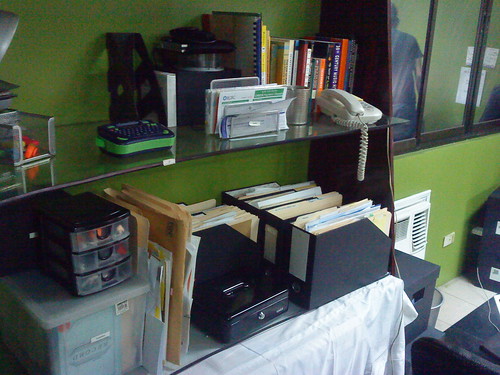
The one thing in this book that made me want to put it down, run to my office, and implement it on the spot was, in fact, her filing system. Hunt takes a few pages to go over exactly what personal records you should be keeping, and outlines an elegant effective way to organize them. I spent an hour tearing apart my filing cabinet yesterday as soon as I read those pages. I may not want my marriage to look much like hers, but I’m delighted to have made over my filing cabinet in Mary Hunt’s image.


Different views

There are a few areas where Mary’s financial advice deviates from the usual Get Rich Slowly formula. One is the matter of the debt snowball. She encourages readers to start saving 10% of their income towards an emergency fund immediately, while still paying the minimums on their credit cards. Only after saving up a fully funded six-month emergency fund would Hunt advise you to roll those savings into your credit card payments.


Given the relative interest rates on credit cards and savings accounts, this approach will almost certainly cost you money. If it works for you psychologically, though, by all means pursue it. No matter what order you do them in, the key steps of tracking your spending, creating an emergency fund, and snowballing your debt payments will lead you to financial security.


Another place where she breaks with conventional wisdom is in her savings and spending ratios. GRS readers are familiar with the Balanced Money Formula that encourages us to use 50% of our money for living expenses, 30% for fun and 20% for savings. Hunt advises 10% for giving, 10% for saving and 80% for spending.


The order of those percentages is vital to her. A devout Christian, Hunt feels that all the money that comes into your life is a blessing from God, and promptly giving 10% of it back to God shows you can be trusted with this blessing, and more of it will come your way.


I’m not a Christian, but I admire Mary’s faith and devotion to charitable giving. It’s a goal of mine to give 10% of my income. I’ve written about that here before, and readers made a persuasive case for waiting until my debts were paid before giving so much away. For now, I give a modest amount and look forward to giving more in the future.


I think that for Hunt, the psychological benefits of giving 10% and saving 10% before you make any spending decisions at all outweigh the financial benefits of paying off your debts as fast as possible and then beginning to accumulate and donate wealth.


It’s an interesting approach, and one that might work for a lot of people. Particularly if you’re a devoted Christian and looking for a personal-finance book that reflects your values, you’ll find a lot of good in How to Debt-Proof Your Marriage. If you’re looking for a book that’s totally focused on financial savvy and relationship skills, though, this might not be your best bet.


penis extender

Brad Friedman and Desi Doyen: Green <b>News</b> Report: September 14 <b>...</b>

IN 'GREEN NEWS EXTRA' (see links below): Carbon nanotube "solar funnel" boosts solar panels; EPA holds contentious hearings on "fracking"; Coal Industry is Safe, says new Australian climate minister; Electric bicycle range reaching the ...

Samsung NX100 mirrorless compact launched and previewed: Digital <b>...</b>

Samsung NX100 mirrorless compact launched and previewed: Samsung has announced the addition of the NX100 to its NX series of mirrorless interchangeable lens cameras. It features the same 14.6Mp sensor and 3.0" OLED screen as the NX10, ...

Pew: Online <b>News</b> Use Growing But Traditional Methods Hanging In <b>...</b>

Print newspapers and radio are still slipping as sources but U.S. adults are spending more time with news these days when the internet and traditional platforms are combined. The amount of time spent on traditional platforms hasn't ...


makeshift filing cabinet with magazine file holders by pinoywebstartup


internet marketing course

Brad Friedman and Desi Doyen: Green <b>News</b> Report: September 14 <b>...</b>

IN 'GREEN NEWS EXTRA' (see links below): Carbon nanotube "solar funnel" boosts solar panels; EPA holds contentious hearings on "fracking"; Coal Industry is Safe, says new Australian climate minister; Electric bicycle range reaching the ...

Samsung NX100 mirrorless compact launched and previewed: Digital <b>...</b>

Samsung NX100 mirrorless compact launched and previewed: Samsung has announced the addition of the NX100 to its NX series of mirrorless interchangeable lens cameras. It features the same 14.6Mp sensor and 3.0" OLED screen as the NX10, ...

Pew: Online <b>News</b> Use Growing But Traditional Methods Hanging In <b>...</b>

Print newspapers and radio are still slipping as sources but U.S. adults are spending more time with news these days when the internet and traditional platforms are combined. The amount of time spent on traditional platforms hasn't ...


big white booty

makeshift filing cabinet with magazine file holders by pinoywebstartup


Thursday, September 2, 2010

personal finance budgets


Some Republicans and Democrats can get their heads together now and then.


When I had the privilege of working for Senator Jeff Bingaman (D-NM) in the US Senate, I had just moved over from serving as founding Executive Director of the Nixon Center for Peace & Freedom, later renamed (thankfully) "The Nixon Center".


Senator Bingaman at the time, along with his chief of staff Patrick Von Bargen, were asking key questions about the structure of international trade and finance and why such large bilateral deficits were building between the US and respectively Japan and China. University of Chicago-trained neoclassical economists regularly parroted the line that bilateral deficits were "meaningless" and would be balanced out over time with other global trade partners -- and would on a bilateral basis rise and fall, appearing and disappearing in a highly fluid global economic environment.


Bingaman's and Von Bargen's questions then are even more relevant today -- and given the time on the clock since, it's clear that the economists who argued that deficits were meaningless or that a job is a job is a job -- whether working as a wallet maker or a nano-technology app developer -- were wrong.


But Jeff Bingaman, even though skeptical about how the global economy was working in real rather than ideological terms, never turned his back on international engagement. In 1996, Bingaman, Von Bargen and I traveled to Japan, South Korea, China, and other parts of Asia. This, then, was an annual trip supplemented by his personal trips to Guatemala and trips to Europe, Russia and more. Bingaman, now Chairman of the Senate Committee on Energy, remains deeply engaged and interested in international affairs.


And while most Senators and Congressman make a point of pushing 95% of their available press time towards the Bartlesville news outlet (in the case of Oklahoma) over the demands of the Yomiuri, Le Monde, Al Jazeera, or the People's Daily, Bingaman is one that does make time for international media.


The Nixon Center as well was stacked with big personalities who were then and remain deeply committed to America's engagement in global affairs. While the Nixon Center is actually fastidiously non-partisan and has key Dems and Republicans engaged with it, it's hard to hide all of its Republican stripes when in fact the institution's inspiration and founder was a powerful two-term winning Republican President of the United States.


My point is that there are Democrats and Republicans -- lots of them -- committed to robust international engagement, to smart foreign aid, and to coherent and sensible U.S. international public diplomacy.


But just as when I worked for Bingaman in the Senate and there were some Democrats and more Republicans who looked at having a passport as a political liability, many in the Tea Party movement are a manifestation of a similar pugnacious nationalism that disdains international institutions and US engagement abroad.


One of the major bipartisan NGOs committed to internationalism in Washington is the U.S. Global Leadership Coalition. I attended the USGLC's gala dinner last year featuring NBC's Andrea Mitchell and Secretary of State Hillary Clinton.


But the guy who really impressed me was the charismatic Republican Congressman from Illinois, Aaron Schock -- who went on stage and made a case as strong as any liberal internationalist I have heard for the hard core national interest reasons that the U.S. should support global affairs and engagement -- and yes, foreign aid budgets.


Aaron Schock is a serious player on the way up -- and too many are distracted by his better than average looks and youth. I didn't support his approach to Honduras (for the most part) that he seemed to have jointly worked out with Senator Jim DeMint -- but that is beside the point. Schock is thinking hard about smart policy, not just coasting with his new found power and privileges in Washington.


If the USGLC can bring Hillary Clinton and the Republican House Deputy Whip together to sing from similar playbooks, then I have time for this private sector initiative to promote public support for international engagement.


If you are in DC (and if not, I am sure that there will be "live streaming" that I will arrange to have run here at TWN), you might want to attend the annual USGLC 2010 Washington Conference (registration information here) that takes place September 28-29, 2010 at Washington's Grand Hyatt.


I would support this meeting whether I was speaking or not -- but I happen to be on the program along with NBC Meet the Press' David Gregory, Under Secretary of the Treasury Lael Brainard, US AID Administrator Rajiv Shah, U.S. Trade Representative Ron Kirk, and the indefatigable Joshua Rogin -- who writes Foreign Policy's "The Cable".


-- Steve Clemons publishes the popular political blog, The Washington Note. Clemons can be followed on Twitter @SCClemons


Now that Wesabe is officially closed, many users are looking for an alternative that offers the same flexibility and features -- for many this alternative is, or should be MoneyStrands.


MoneyStrands is a free tool that has helped people manage their money online since it launched in March 2009 -- and in short order has won a Webby award for the best of the web in the banking and bill-pay category. This honor is no surprise when you consider that MoneyStrands offers features you won't find in many competing tools such as Mint.


Like all modern personal finance tools, MoneyStrands can connect to a large number of banking and financial institutions, but unlike most competitors gives users the ability to manually upload their account data. This option is a must-have for those who don't want to give their login info to a third party, or who bank at a smaller bank or credit union that personal finance tools cannot connect to for automatic updates.


MoneyStrands also sets itself apart from the competition because it is designed to make it easy for international and non-English speaking users to use the tool. The MoneyStrands website can be viewed in both English and Spanish with a toggle in the settings and users can choose their preferred currency from a long list. According to MoneyStrands, consumers use the service in 44 countries.


These features supplement the standard account linking and money management that the MoneyStrands tool handles well. Users can view spending and account history in one location as well as compare spending in categories such as shopping, food & dining and more to see how they stack up to the rest of the community. Filters allow you to compare yourself to other members based on age, gender, marital status, education and other variables.


MoneyStrands also has a budgeting tool that tracks spending and sets email alerts when a budget category reaches a certain level so spending can be put in check. The tool is fairly simple and requires users to figure out their own goals, but Atakan Cetinsoy, General Manager of MoneyStrands told WalletPop in a phone interview that an improved budgeting tool that walks users through the process is coming in the next few months.


MoneyStrands is easy to use and offers significant value to users; especially those who can't or don't want to link their accounts directly to a third-party service.

do how to lose weight fast pills work

<b>News</b> Roundup: &#39;Glee&#39; Promo Teases Relationship Drama, &#39;Buffy&#39; Star <b>...</b>

Rachel and Finn are finally happy together on 'Glee' ... right? Well, if you're living your life spoiler-free, stop reading. In a new promo, Fox teas.

Alzheimer&#39;s Trade-off For Mentally Active Seniors - Science <b>News</b>

Stimulation delays cognitive decline, but disease advances quickly once it starts.

Small Business <b>News</b>: Social Media Power!

If you haven't figured it out, gotten on board, jumped on the bandwagon (pick your own expression)...well, we're not going to try to talk you into it. Just be.


BARYCY by Itani stock photos


Wednesday, September 1, 2010

managing your personal finances


fxaxwmy

Rupert Murdoch and <b>News</b> Corp. to Be Swing Vote for 99-Cent iTunes <b>...</b>

The Los Angeles Times reports that Apple is still working to convince media companies to adopt its plan for 99-cent TV show rentals through its iTunes Store. According to those close to the negotiati.

Media Matters Ad On Fox <b>News</b> | I Million Donation To GOP | <b>News</b> <b>...</b>

Politico is reporting that Fox News has agreed to run an advertisement created by media watchdog group Media Matters that is critical of News Corp. donating $1 Million to the Republican Governor's Association. Last week Mediaite had ...

<b>News</b> Roundup: Stan Lee to Guest on &#39;Nikita,&#39; NBC Renews &#39;America&#39;s <b>...</b>

Stan Lee, creator of some of the most recognizable comic book superheroes such as Spider-Man, the Fantastic Four and the X-Men, will pop up on.


Wednesday, August 25, 2010

personal finance budgets


Some Republicans and Democrats can get their heads together now and then.


When I had the privilege of working for Senator Jeff Bingaman (D-NM) in the US Senate, I had just moved over from serving as founding Executive Director of the Nixon Center for Peace & Freedom, later renamed (thankfully) "The Nixon Center".


Senator Bingaman at the time, along with his chief of staff Patrick Von Bargen, were asking key questions about the structure of international trade and finance and why such large bilateral deficits were building between the US and respectively Japan and China. University of Chicago-trained neoclassical economists regularly parroted the line that bilateral deficits were "meaningless" and would be balanced out over time with other global trade partners -- and would on a bilateral basis rise and fall, appearing and disappearing in a highly fluid global economic environment.


Bingaman's and Von Bargen's questions then are even more relevant today -- and given the time on the clock since, it's clear that the economists who argued that deficits were meaningless or that a job is a job is a job -- whether working as a wallet maker or a nano-technology app developer -- were wrong.


But Jeff Bingaman, even though skeptical about how the global economy was working in real rather than ideological terms, never turned his back on international engagement. In 1996, Bingaman, Von Bargen and I traveled to Japan, South Korea, China, and other parts of Asia. This, then, was an annual trip supplemented by his personal trips to Guatemala and trips to Europe, Russia and more. Bingaman, now Chairman of the Senate Committee on Energy, remains deeply engaged and interested in international affairs.


And while most Senators and Congressman make a point of pushing 95% of their available press time towards the Bartlesville news outlet (in the case of Oklahoma) over the demands of the Yomiuri, Le Monde, Al Jazeera, or the People's Daily, Bingaman is one that does make time for international media.


The Nixon Center as well was stacked with big personalities who were then and remain deeply committed to America's engagement in global affairs. While the Nixon Center is actually fastidiously non-partisan and has key Dems and Republicans engaged with it, it's hard to hide all of its Republican stripes when in fact the institution's inspiration and founder was a powerful two-term winning Republican President of the United States.


My point is that there are Democrats and Republicans -- lots of them -- committed to robust international engagement, to smart foreign aid, and to coherent and sensible U.S. international public diplomacy.


But just as when I worked for Bingaman in the Senate and there were some Democrats and more Republicans who looked at having a passport as a political liability, many in the Tea Party movement are a manifestation of a similar pugnacious nationalism that disdains international institutions and US engagement abroad.


One of the major bipartisan NGOs committed to internationalism in Washington is the U.S. Global Leadership Coalition. I attended the USGLC's gala dinner last year featuring NBC's Andrea Mitchell and Secretary of State Hillary Clinton.


But the guy who really impressed me was the charismatic Republican Congressman from Illinois, Aaron Schock -- who went on stage and made a case as strong as any liberal internationalist I have heard for the hard core national interest reasons that the U.S. should support global affairs and engagement -- and yes, foreign aid budgets.


Aaron Schock is a serious player on the way up -- and too many are distracted by his better than average looks and youth. I didn't support his approach to Honduras (for the most part) that he seemed to have jointly worked out with Senator Jim DeMint -- but that is beside the point. Schock is thinking hard about smart policy, not just coasting with his new found power and privileges in Washington.


If the USGLC can bring Hillary Clinton and the Republican House Deputy Whip together to sing from similar playbooks, then I have time for this private sector initiative to promote public support for international engagement.


If you are in DC (and if not, I am sure that there will be "live streaming" that I will arrange to have run here at TWN), you might want to attend the annual USGLC 2010 Washington Conference (registration information here) that takes place September 28-29, 2010 at Washington's Grand Hyatt.


I would support this meeting whether I was speaking or not -- but I happen to be on the program along with NBC Meet the Press' David Gregory, Under Secretary of the Treasury Lael Brainard, US AID Administrator Rajiv Shah, U.S. Trade Representative Ron Kirk, and the indefatigable Joshua Rogin -- who writes Foreign Policy's "The Cable".


-- Steve Clemons publishes the popular political blog, The Washington Note. Clemons can be followed on Twitter @SCClemons


Now that Wesabe is officially closed, many users are looking for an alternative that offers the same flexibility and features -- for many this alternative is, or should be MoneyStrands.


MoneyStrands is a free tool that has helped people manage their money online since it launched in March 2009 -- and in short order has won a Webby award for the best of the web in the banking and bill-pay category. This honor is no surprise when you consider that MoneyStrands offers features you won't find in many competing tools such as Mint.


Like all modern personal finance tools, MoneyStrands can connect to a large number of banking and financial institutions, but unlike most competitors gives users the ability to manually upload their account data. This option is a must-have for those who don't want to give their login info to a third party, or who bank at a smaller bank or credit union that personal finance tools cannot connect to for automatic updates.


MoneyStrands also sets itself apart from the competition because it is designed to make it easy for international and non-English speaking users to use the tool. The MoneyStrands website can be viewed in both English and Spanish with a toggle in the settings and users can choose their preferred currency from a long list. According to MoneyStrands, consumers use the service in 44 countries.


These features supplement the standard account linking and money management that the MoneyStrands tool handles well. Users can view spending and account history in one location as well as compare spending in categories such as shopping, food & dining and more to see how they stack up to the rest of the community. Filters allow you to compare yourself to other members based on age, gender, marital status, education and other variables.


MoneyStrands also has a budgeting tool that tracks spending and sets email alerts when a budget category reaches a certain level so spending can be put in check. The tool is fairly simple and requires users to figure out their own goals, but Atakan Cetinsoy, General Manager of MoneyStrands told WalletPop in a phone interview that an improved budgeting tool that walks users through the process is coming in the next few months.


MoneyStrands is easy to use and offers significant value to users; especially those who can't or don't want to link their accounts directly to a third-party service.

canadian penis extender

Calculated Risk: More Negative <b>News</b> Flow Coming

We've definitely entered a period of downbeat economic news. Note: I still think the economy will avoid a technical double-dip recession, but the odds are uncomfortably high - and it will probably feel like a recession to millions of ...

Did Fox <b>News</b> Call Media Matters Bluff Over $1 Million GOP Donation <b>...</b>

Progressive media watchdog group Media Matters recently created a television ad critical of News Corp.'s $1 Million donation to the Republican Governor's Association, and have requested airtime during The O'Reilly Factor on Fox News to ...

&#39;CBS Evening <b>News</b>&#39; Ratings Hit Record LOW During Katie Couric&#39;s <b>...</b>

NEW YORK — Katie Couric and the "CBS Evening News" team did some striking work during a two-day trip to Afghanistan last week, only to see some record-setting low ratings in return. The Nielsen Co. ratings have to be discouraging to ...


Friday, August 6, 2010

personal finance manager


Tracking your spendings online with web apps is very convenient since they offer the power of monitoring your expenses in detail without the clunky interface found in desktop apps. If you are looking for alternatives to popular personal finance apps, then you should check out Accpal. This Silverlight-based money management tool allows you to track your accounts with extra features such as multi-level tagging, comprehensive reports, and one-click transactions.


To use Accpal, simply add your new account and currency. After which, you can start adding individual transactions. You can add multiple transactions by clicking “Add & New” while adding an entry. Inputting data feels like working with a spreadsheet which is not necessarily a bad thing. In fact, many will find this a nice surprise since you can see your income and expenses in one glance.


The highlight of this app is the multi-level tagging feature. With multi-level tagging, you can break down your transaction into a single tag nested under a broader tag. For example, you can click coffee as a tag under “food”, and you can even go deeper and tag “espresso”, under coffee. This gives you an idea of what exactly you are spending on. This differs from other web apps that lets you tag as much as you like, leaving you to organize the transactions yourself.


Accpal is a nifty website for anyone who needs a better-organized online money management tool.


Features


  • Track your expenses online.

  • Free of charge.

  • Requires Silverlight 4.

  • Tag your transactions – multi-level tagging.

  • Comprehensive reporting.

  • Export to Excel.

  • Shortcuts allow for one click reporting and transactions.

  • Similar Tools: BudgetTracker, BudgetPulse, Thrive, and BillFloat .


Check out Accpal @ www.accpal.com


Aaron Patzer, the founder of Mint.com (2008), sold his company to Intuit for $170 million and has been ensconced as Vice President and General Manager of Intuit Personal Finance Group. But he hasn't forgotten his entrepreneurial roots. He's using that stack of cash from Intuit to make some angel investments of his own, including a stake in Jack Abraham's Milo.com, which is on this year's list. And he's also an informal advisor to Anapata's Ooshma Garg.


When he appeared on the 30 Under 30 list in 2008, Etsy founder Rob Kalin had just hired a professional CEO and given up day-to-day management responsibilities. But last December, Kalin retook the reins. Etsy has thrived since--the company is profitable and has been posting double-digit monthly sales gains. In his spare time, Kalin is working on a second company, Parachutes.org, an online education start-up.


Chaim Indig and Evan Roberts, the founders of Phreesia (2008), closed a $16 million Series D investment from Ascension Health Ventures in May. Phreesia, a self-service patient check-in company that makes electronic tablets for use in doctors' offices, will use the investment to expand its nationwide presence.


Involver founders Rahim Fazal and Noah Horton (2008), have added Facebook, the White House, and Sony Music to their client list. Involver, which helps companies and organizations build their video presence across social networking platforms, now supports more than 80,000 brands.


It's been a big year for Ben Lerer and Adam Rich and their company Thrillist (2009). Early in 2010, Lerer and his father Ken, co-founder of The Huffington Post, launched the New York City-based angel fund Lerer Media Ventures. And in the spring, Thrillist made its first acquisition, expanding into the e-commerce space with the purchase of Jack Threads, a flash-sale site for men's streetwear that works similarly to Gilt.com. With the deal, Thrillist diversifies its business, which was heavily dependent on advertising revenue, while Jack Threads will get its name in front of Thrillist's nearly 2 million e-mail subscribers.  "We have the e-mail list and they have the vendor relationships," Lerer says. "The case we made is that it would be just so much easier for them if they didn't have to worry about building the audience."


Box.net's (2008) Aaron Levie and Dylan Smith grew their company more than 535 percent in 2009 and tripled revenue in the first half of 2010 compared to the same period in 2009.  Box.net allows users to share, store, and access any type of digital file from anywhere at anytime, and now has more than 4 million users, ranging from SMBs to giants like Volvo, Audi and Coca Cola. The company launched one of the first customized business applications for the iPad, developed mobile applications for the iPhone and Blackberry, and also integrated with other mobile productivity applications. Last April, the founders landed $15M in Series C financing, led by Scale Venture Partners, bringing Box.net's total venture funding to $29.5M.  Levie and Smith plan to invest aggressively in R&D and will add a significant number of employees.


Ben Kaufman (2007) sold Mophie in August of 2007 and began developing Kluster, a platform designed for group decision making and measuring influence. It's Kluster that drives Quirky, the social product development company that Kaufman launched in June 2009.  Quirky develops one new product a week and shares the revenue with the influencers who helped develop each product. Since launch, Quirky has collaboratively developed 46 new products, hit threshold on 16 (the trigger that sends a product into production) and raised $6 million dollars in series A financing led by RRE (also an investor in Venmo, on this year's list.)


penis extender

Chrysler Building by Emilio Guerra


Tracking your spendings online with web apps is very convenient since they offer the power of monitoring your expenses in detail without the clunky interface found in desktop apps. If you are looking for alternatives to popular personal finance apps, then you should check out Accpal. This Silverlight-based money management tool allows you to track your accounts with extra features such as multi-level tagging, comprehensive reports, and one-click transactions.


To use Accpal, simply add your new account and currency. After which, you can start adding individual transactions. You can add multiple transactions by clicking “Add & New” while adding an entry. Inputting data feels like working with a spreadsheet which is not necessarily a bad thing. In fact, many will find this a nice surprise since you can see your income and expenses in one glance.


The highlight of this app is the multi-level tagging feature. With multi-level tagging, you can break down your transaction into a single tag nested under a broader tag. For example, you can click coffee as a tag under “food”, and you can even go deeper and tag “espresso”, under coffee. This gives you an idea of what exactly you are spending on. This differs from other web apps that lets you tag as much as you like, leaving you to organize the transactions yourself.


Accpal is a nifty website for anyone who needs a better-organized online money management tool.


Features


  • Track your expenses online.

  • Free of charge.

  • Requires Silverlight 4.

  • Tag your transactions – multi-level tagging.

  • Comprehensive reporting.

  • Export to Excel.

  • Shortcuts allow for one click reporting and transactions.

  • Similar Tools: BudgetTracker, BudgetPulse, Thrive, and BillFloat .


Check out Accpal @ www.accpal.com


Aaron Patzer, the founder of Mint.com (2008), sold his company to Intuit for $170 million and has been ensconced as Vice President and General Manager of Intuit Personal Finance Group. But he hasn't forgotten his entrepreneurial roots. He's using that stack of cash from Intuit to make some angel investments of his own, including a stake in Jack Abraham's Milo.com, which is on this year's list. And he's also an informal advisor to Anapata's Ooshma Garg.


When he appeared on the 30 Under 30 list in 2008, Etsy founder Rob Kalin had just hired a professional CEO and given up day-to-day management responsibilities. But last December, Kalin retook the reins. Etsy has thrived since--the company is profitable and has been posting double-digit monthly sales gains. In his spare time, Kalin is working on a second company, Parachutes.org, an online education start-up.


Chaim Indig and Evan Roberts, the founders of Phreesia (2008), closed a $16 million Series D investment from Ascension Health Ventures in May. Phreesia, a self-service patient check-in company that makes electronic tablets for use in doctors' offices, will use the investment to expand its nationwide presence.


Involver founders Rahim Fazal and Noah Horton (2008), have added Facebook, the White House, and Sony Music to their client list. Involver, which helps companies and organizations build their video presence across social networking platforms, now supports more than 80,000 brands.


It's been a big year for Ben Lerer and Adam Rich and their company Thrillist (2009). Early in 2010, Lerer and his father Ken, co-founder of The Huffington Post, launched the New York City-based angel fund Lerer Media Ventures. And in the spring, Thrillist made its first acquisition, expanding into the e-commerce space with the purchase of Jack Threads, a flash-sale site for men's streetwear that works similarly to Gilt.com. With the deal, Thrillist diversifies its business, which was heavily dependent on advertising revenue, while Jack Threads will get its name in front of Thrillist's nearly 2 million e-mail subscribers.  "We have the e-mail list and they have the vendor relationships," Lerer says. "The case we made is that it would be just so much easier for them if they didn't have to worry about building the audience."


Box.net's (2008) Aaron Levie and Dylan Smith grew their company more than 535 percent in 2009 and tripled revenue in the first half of 2010 compared to the same period in 2009.  Box.net allows users to share, store, and access any type of digital file from anywhere at anytime, and now has more than 4 million users, ranging from SMBs to giants like Volvo, Audi and Coca Cola. The company launched one of the first customized business applications for the iPad, developed mobile applications for the iPhone and Blackberry, and also integrated with other mobile productivity applications. Last April, the founders landed $15M in Series C financing, led by Scale Venture Partners, bringing Box.net's total venture funding to $29.5M.  Levie and Smith plan to invest aggressively in R&D and will add a significant number of employees.


Ben Kaufman (2007) sold Mophie in August of 2007 and began developing Kluster, a platform designed for group decision making and measuring influence. It's Kluster that drives Quirky, the social product development company that Kaufman launched in June 2009.  Quirky develops one new product a week and shares the revenue with the influencers who helped develop each product. Since launch, Quirky has collaboratively developed 46 new products, hit threshold on 16 (the trigger that sends a product into production) and raised $6 million dollars in series A financing led by RRE (also an investor in Venmo, on this year's list.)


online stock trading online stock trading how to lose weight fast

Stabroek <b>News</b> - Starr to roll out $40000 computer before end of 2011

Daily News, Sports, Business, Entertainment and more from Guyana.

Spectroscopic science <b>news</b>

These are my links for July 30th from 18:21 to 18:27: Space balls redux - I've reported on this ...

Small Business <b>News</b>: The Online Entrepreneur | Small Business <b>News</b> <b>...</b>

Planning a new small business? You may want to consider doing it online. In this small business news roundup, we look at a variety of tools and tips for.


Chrysler Building by Emilio Guerra


big white booty